

Can Invisalign Fix Overbite?
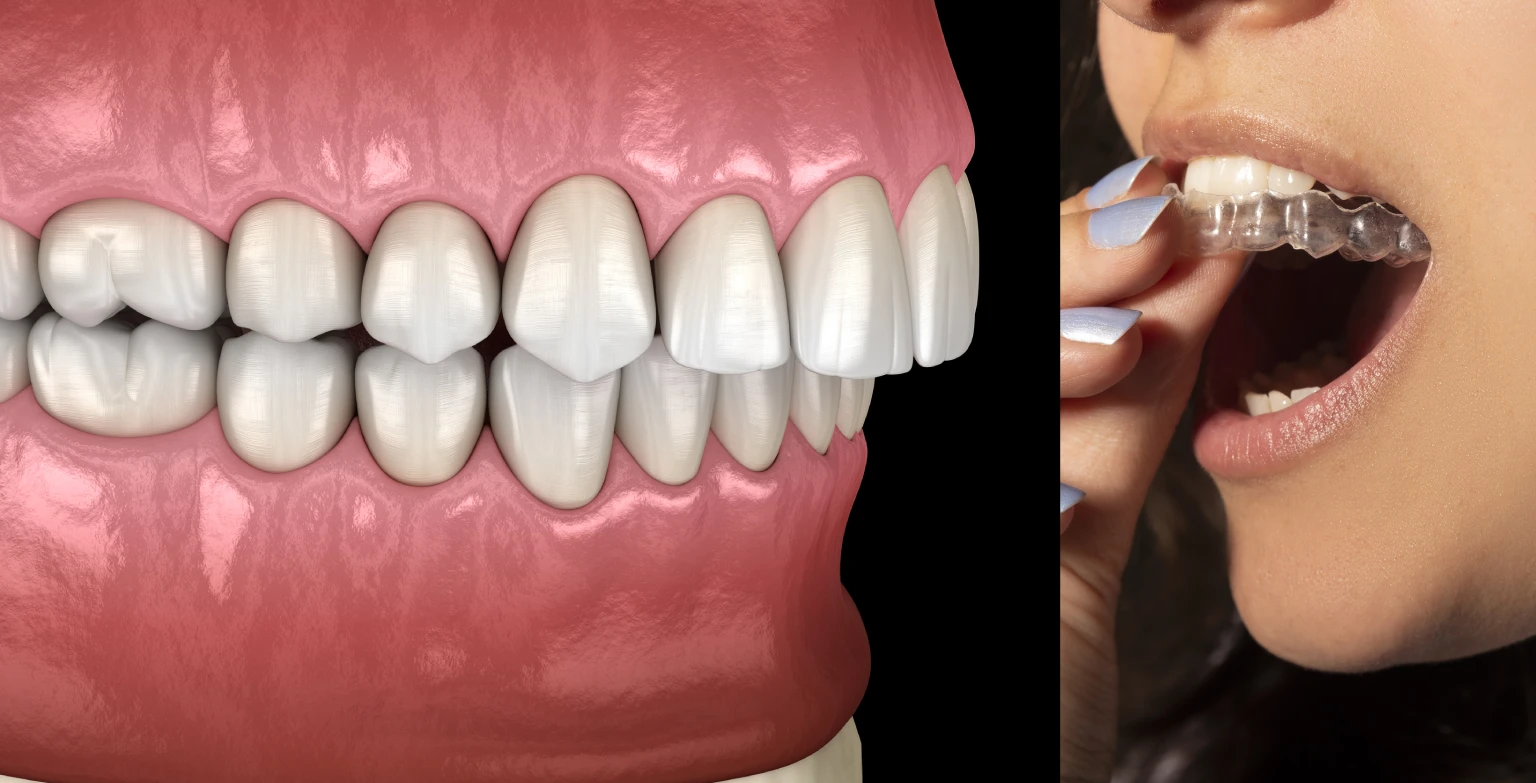
If you have been told you have an overbite, or you notice your upper teeth overlap your lower teeth more than they should, one question often comes up immediately. Does Invisalign fix overbite? This question matters for both appearance and oral health. An untreated overbite affects chewing efficiency, jaw comfort, tooth wear, and long-term bite stability. Many adults hesitate to seek orthodontic treatment because they want a discreet solution rather than traditional metal braces.
Invisalign has transformed modern orthodontic care, but it does not work the same way for every type of bite issue. This guide explains whether Invisalign corrects overbites, which cases respond best, where limitations exist, and what to expect during an initial evaluation.
What Is an Overbite?
An overbite describes how much the upper front teeth overlap the lower front teeth when the mouth closes. A small overlap is healthy. Excess overlap creates functional and cosmetic problems. Dentists classify overbites into three main categories.
- Dental Overbite: This involves tooth position only. The jaw alignment stays normal, but the teeth tilt or erupt improperly.
- Skeletal Overbite: This relates to jaw growth. The upper jaw extends forward, the lower jaw sits back, or both.
- Deep Bite: A severe form where the upper front teeth cover most of the lower teeth. Gum trauma and enamel wear often follow.

Does Invisalign Fix Overbite?
Yes, whether Invisalign fix overbite depends on the underlying cause, severity, and how the treatment is planned. Invisalign is highly effective for many mild to moderate overbites when the issue relates primarily to tooth positioning rather than jaw structure.
Overbites develop for different reasons. Some occur because the upper teeth tilt forward or erupt too far downward. Others form due to habits, uneven tooth wear, or long-term misalignment. In these situations, Invisalign applies controlled force to reposition teeth gradually, reducing excessive overlap and restoring a more balanced bite.
Invisalign works best for patients with:
- Mild to moderate dental overbites, where tooth alignment is the primary concern
- Deep bites without major jaw discrepancies, especially when back teeth support is present
- Adults and teens with fully developed jaws, where tooth movement remains predictable
- Patients are committed to wearing aligners 20 to 22 hours per day, ensuring consistent progress
When used correctly, Invisalign can intrude the upper front teeth, adjust lower tooth positions, and align the arches. This improves bite contact, chewing efficiency, and long-term stability, not only appearance.
However, Invisalign has defined limits. Overbites caused by significant differences in jaw size, severe skeletal imbalance, or growth-related discrepancies often require advanced orthodontic treatment or surgical intervention. Clear aligners alone cannot reposition jawbones.
How Age and Jawbone Structure Affect Invisalign Overbite Treatment
How Jawbone Flexibility Affects Treatment
In children and teenagers, the jawbone is still developing. This natural flexibility allows orthodontic treatment to influence both tooth position and jaw growth. As a result, overbite correction in younger patients often occurs faster and with fewer mechanical limitations.
In adults, jaw growth is complete. The bone becomes denser and less adaptable. Invisalign still works effectively, but correction relies entirely on tooth repositioning within the existing bone, not jaw modification. Because of this, adult treatment requires:
- More precise digital planning
- Controlled force sequencing
- Consistent aligner wear
- Proper retention after treatment
When these factors are followed, outcomes remain predictable and stable.
Invisalign Effectiveness by Age Group
- Teenagers and Young Adults: Higher bone responsiveness allows Invisalign to correct dental overbites efficiently. Treatment timelines are often shorter, and deep bites respond well when addressed early.
- Adults (30s to 50s and beyond): Invisalign remains effective for mild to moderate overbites. Tooth movement progresses slightly slower, but long-term stability improves when treatment pacing is appropriate. Adult compliance often supports strong results.
What Age Cannot Change
Age does not stop Invisalign from correcting tooth position. It only influences how aggressively movement should occur. Respecting these limits protects tooth roots, bone health, and long-term bite stability.
How Invisalign Corrects an Overbite?
Invisalign corrects an overbite by applying controlled, staged force through custom-made clear aligners. Each aligner is designed using advanced digital planning to move teeth in specific directions over time. Rather than shifting all teeth at once, Invisalign works gradually, allowing precise bite correction with predictable results. For overbite correction, Invisalign focuses on several coordinated movements:
- Intruding the upper front teeth to reduce excessive vertical overlap
- Extruding the lower front teeth when needed to rebalance bite depth
- Aligning the back teeth to provide proper support and prevent a deep bite from returning
- Coordinating the upper and lower arches so the bite closes evenly and comfortably
Many overbite cases also require the use of attachments. These small, tooth-colored shapes are bonded to select teeth to give aligners a better grip. Attachments improve control during complex movements, especially vertical positioning and bite correction.
Invisalign vs Braces for Overbite Correction
Many patients wonder whether clear aligners work as effectively as traditional braces for correcting an overbite. The answer depends on the type and severity of the bite issue.
Invisalign Advantages
- Clear, discreet appearance
- Removable for eating and oral hygiene
- Smooth aligners with improved comfort
- Digital treatment preview before starting
Braces Advantages
- Stronger force control for severe skeletal overbites
- No dependence on daily wear compliance
For most mild to moderate overbites, Invisalign delivers results comparable to braces when treatment is planned and monitored correctly. Success depends more on clinical planning and patient consistency than on the orthodontic system used.
Who Should Consider Other Options?
Invisalign has limits. Severe skeletal discrepancies sometimes require orthodontic braces combined with jaw correction. You might need alternatives if you have:
- Significant jaw size imbalance
- Overbite caused by growth pattern, not teeth
- History of orthodontic relapse with unstable bite
- Need for surgical correction
A responsible clinic addresses these limits honestly rather than overselling aligners.
Does Invisalign Fix Overbite Permanently?
Yes, Invisalign does fix overbite permanently when proper retention follows treatment. Teeth naturally try to shift over time. Retainers help maintain alignment and keep results stable.
Retention planning includes:
- Nighttime retainer wear after treatment
- Ongoing bite monitoring
- Clear guidance on retainer wear schedules
Skipping retainers increases the risk of relapse, regardless of whether treatment involved Invisalign or traditional braces.
Invisalign Treatment Timeline for Overbite Correction
Treatment length depends on the severity of the overbite and the individual tooth movement response.
- Mild overbite: 6 to 9 months
- Moderate overbite: 9 to 15 months
- Deep bite cases: 12 to 18 months
Additional refinements may extend treatment when needed. Invisalign progresses in planned stages rather than shortcuts. Consistent aligner wear influences results more than treatment speed.
Conclusion: Is Invisalign the Right Solution for Your Overbite?
So, does Invisalign fix overbite? For many patients, yes. Invisalign corrects mild to moderate overbites caused by tooth position when treatment is planned carefully, and retention is followed. Proper correction reduces tooth wear, eases jaw strain, and improves bite stability.
Accurate diagnosis matters, as not every overbite responds the same way. When used for the right case, Invisalign delivers reliable, long-lasting results discreetly.
Ready to Take the Next Step?
If you are considering Invisalign for overbite correction, start with a professional evaluation at Brookline Smiles Artist. Schedule your Invisalign consultation today to receive a clear plan, realistic timelines, and expert guidance toward a healthier bite and a confident smile.
FAQs
Does Invisalign fix overbite without attachments?
Attachments improve aligner grip and control. Many overbite cases require attachments to achieve precise vertical tooth movement and predictable bite correction, especially for deep or complex overbites.
Does Invisalign fix overbite faster than braces?
Treatment time is usually similar for Invisalign and braces. Invisalign offers greater comfort and discretion, but speed depends on bite complexity, treatment planning, and consistent aligner wear.
Does Invisalign fix an overbite caused by jaw size?
Invisalign corrects tooth-based overbites effectively. Overbites caused by jaw size differences often require advanced orthodontic planning or surgical evaluation, as aligners cannot reposition jaw bones.
Does Invisalign fix overbite permanently?
Yes, Invisalign results remain stable with proper retention. Wearing retainers as instructed and attending follow-up visits prevents teeth from shifting back and helps maintain long-term bite correction.
Is Invisalign safe for deep bites?
Yes, Invisalign is safe for deep bites when treatment is carefully planned. Proper force control, attachments, and monitoring ensure effective correction without harming teeth or supporting bone.
Can adults benefit from Invisalign overbite treatment?
Yes, adults of any age benefit from Invisalign. Treatment improves bite function, reduces tooth wear, and enhances appearance when planned with attention to bone health and bite stability.

If you are looking for a dentist in Brookline, MA, schedule your consultation with the team at Brookline Smile Artists. We offer Cosmetic and Restorative Dentistry. We are located at 209 Harvard Street, Suite 402 in Brookline. Our office hours are Monday through Thursday from 7:30 AM to 5:30 PM and Friday from 8:00 AM to 2:00 PM.

One of the top rated dentists in Brookline, MA