


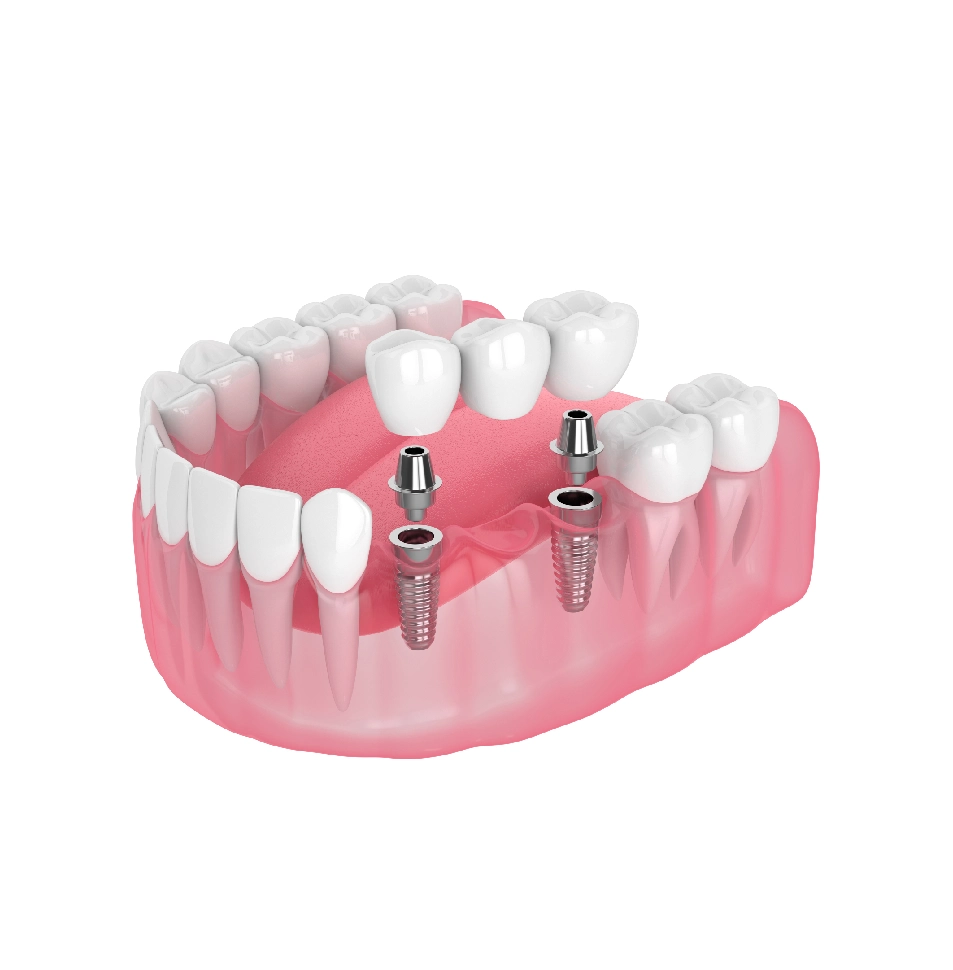
What Are Dental Bridges?

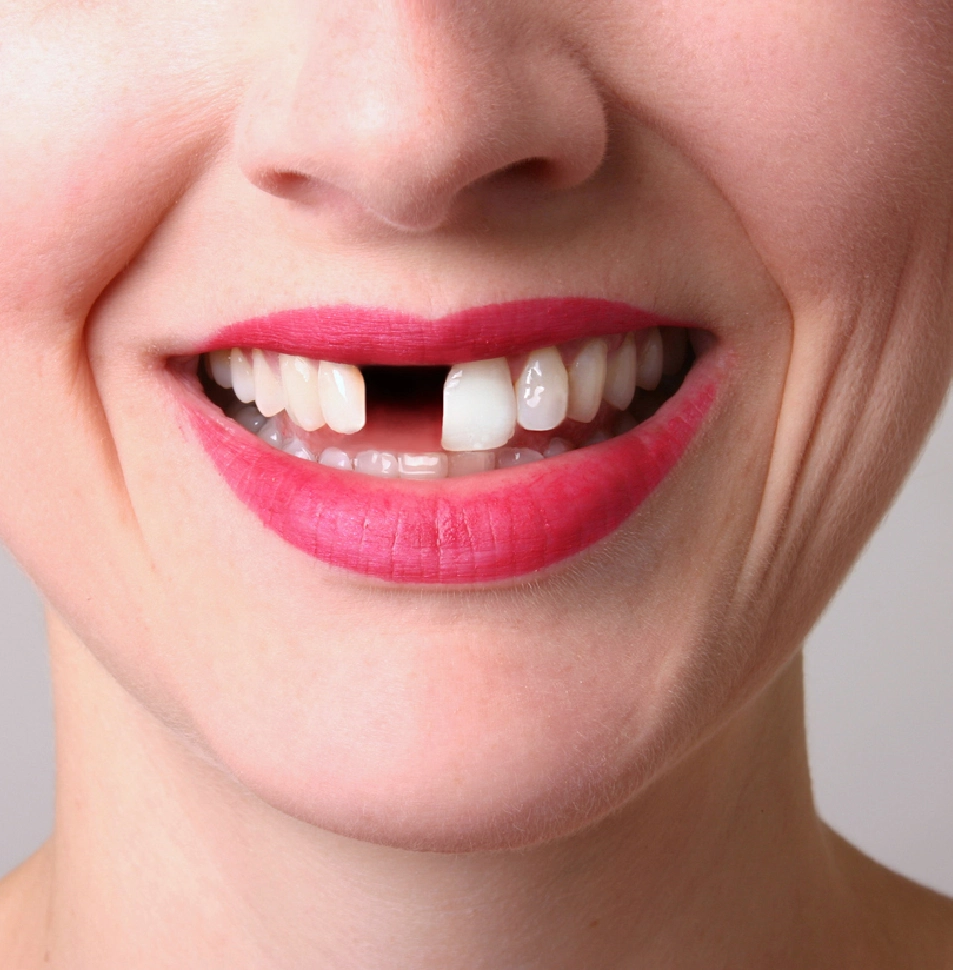
Dental bridges are fixed restorative solutions used to replace one or more missing teeth. They restore continuity to your dental arch by securing a custom-designed replacement tooth in the space where a natural tooth was lost.
- Abutment teeth: These are the neighboring teeth that are carefully prepared to support the bridge and ensure long-term stability
- Dental crowns: Crowns are placed over the abutment teeth to anchor the bridge securely in position.
- Pontic: This is the custom-crafted replacement tooth that fills the gap and is designed to match the shape, size, and bite of your natural teeth.
Who Needs Dental Bridges?
Patients Missing a Single Tooth
- Problem: A visible gap affects confidence and allows neighboring teeth to drift.
- Solution: A custom bridge restores alignment and supports long-term structural balance.
Patients Missing Multiple Adjacent Teeth
- Problem: Chewing becomes inefficient, and uneven bite forces develop.
- Solution:A multi-unit bridge restores support and distributes pressure evenly across the arch.
Patients Experiencing Tooth Shifting
- Problem: Adjacent teeth move into the empty space, leading to misalignment.
- Solution: A fixed restoration stabilizes the dental arch and prevents progressive bite changes.
Patients With Difficulty Chewing
- Problem: One-sided chewing increases stress on remaining teeth.
- Solution: A bridge restores bilateral function and improves chewing efficiency.
Patients Not Ready for Implants
- Problem: Bone volume, medical considerations, or personal preference may limit surgical options.
- Solution: A dental bridge provides a predictable, non-surgical tooth replacement alternative.
Patients Requiring Tooth Extraction
- Problem: Removal of a severely damaged tooth leaves a functional gap.
- Solution: A treatment plan incorporating a bridge restores continuity and stability.
Patients Seeking a Fixed Alternative to Partial Dentures
- Problem: Removable appliances feel unstable or inconvenient.
- Solution: A fixed dental bridge offers improved comfort and secure function.
Types of Dental Bridges
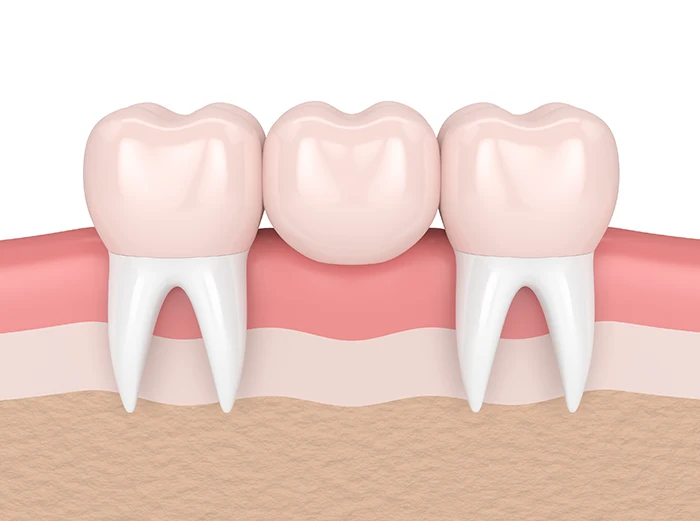
Traditional Dental Bridge
A traditional bridge is the most commonly used option for replacing one or more missing teeth. It is supported by dental crowns placed on the natural teeth adjacent to the gap. This design provides strong support, especially in areas that experience significant chewing forces.
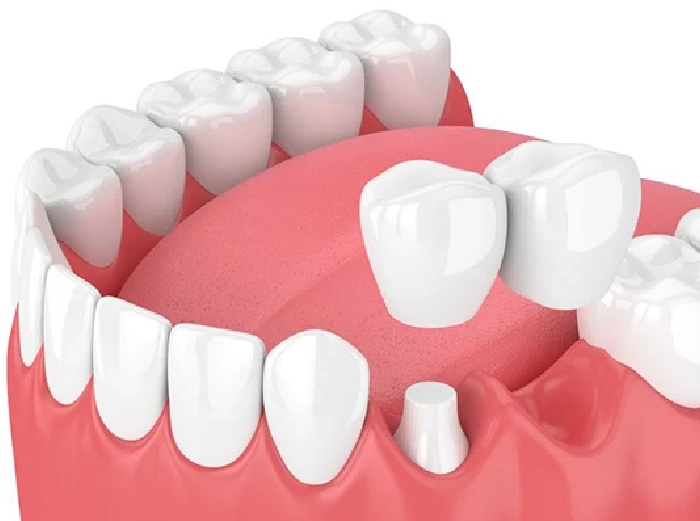
Cantilever Bridge
A cantilever bridge is used when only one natural tooth is available to support the restoration. Because it relies on a single abutment tooth, it is typically recommended in areas of the mouth that experience lower bite pressure.
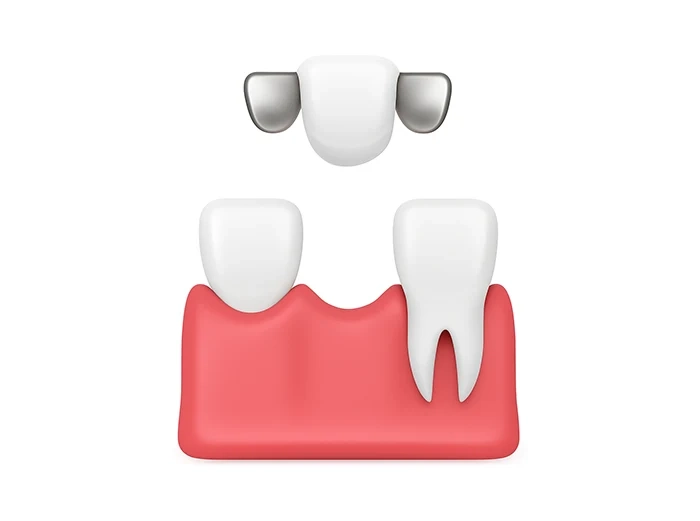
Maryland Bonded Bridge
Also known as a resin-bonded bridge, this option uses a metal or ceramic framework bonded to the back of adjacent teeth rather than full crowns. It is often considered when minimal tooth preparation is preferred.
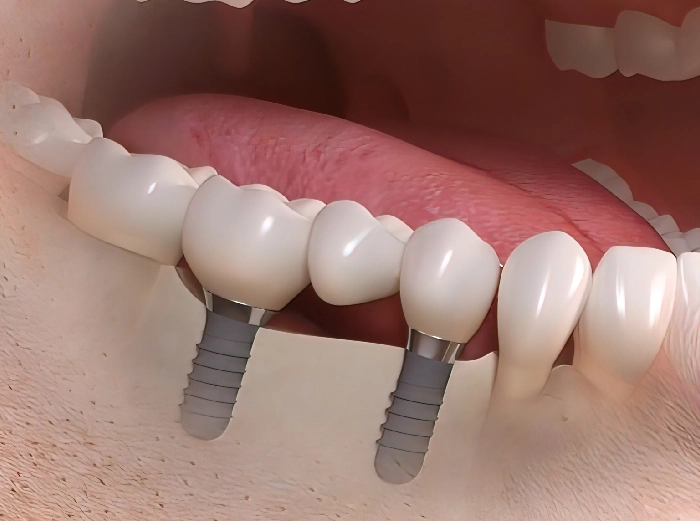
Implant-Supported Bridge
An implant-supported bridge is anchored to dental implants rather than natural teeth. This option is often recommended when multiple teeth are missing and added structural support is required. It allows for independent stability without stressing neighboring teeth.
The Dental Bridge Procedure at Brookline Smile Artists
1. Initial Consultation and Evaluation
We begin by examining your teeth, gums, and bite to determine if a dental bridge is the right solution. We take digital X-rays and assess the strength of the teeth that will support the bridge. During this visit, we explain your options and answer your questions so you feel confident about your treatment plan.
2. Preparing the Supporting Teeth
At your next visit, we gently reshape the neighboring teeth that will anchor the bridge. This step creates space for the crowns that will hold the bridge securely in place. We use precise digital scanning to capture detailed images of your teeth, which helps ensure a natural fit.
3. Temporary Bridge Placement
After preparation, we place a temporary bridge to protect your teeth and maintain your smile while your permanent restoration is being crafted. You can continue normal daily activities during this phase. Some mild sensitivity is normal, but it usually improves quickly.
4. Creating Your Custom Bridge
Your final bridge is carefully fabricated to match the color, contour, and shape of your natural teeth. We focus on creating a restoration that looks seamless and feels comfortable when you bite and chew.
5. Final Placement and Adjustment
When your permanent bridge is ready, we check the fit and make small adjustments to ensure your bite feels even. Once everything aligns properly, we secure the bridge in place. Most patients adapt quickly and appreciate the immediate improvement in stability and appearance.
6. Follow-Up Care
We schedule a follow-up visit if needed to confirm comfort and function. Routine checkups help us monitor your bridge and maintain long-term oral health.

Benefits of Dental Bridges
- Restores Your Smile: A bridge fills the gap with a custom-designed tooth that blends naturally with surrounding teeth.
- Improves Chewing: It restores proper bite contact so you can chew evenly and comfortably.
- Prevents Shifting: Closing the space helps keep neighboring teeth from drifting out of alignment.
- Maintains Bite Balance: A complete dental arch distributes chewing forces more evenly and protects remaining teeth.
- Provides a Fixed Solution: Unlike removable appliances, a bridge stays securely in place for daily function.
- Supports Long-Term Stability: When properly maintained, a dental bridge offers reliable, predictable performance.
Cost of Dental Bridges in Brookline, MA
| Treatment Component | Estimated Cost Range |
| Single Crown (Abutment) | $1,200 – $2,000 |
| Pontic (Replacement Tooth) | $1,000 – $1,800 |
| Three-Unit Bridge | $3,000 – $5,500 |
| Maryland Bridge | $2,000 – $3,500 |
| Implant-Supported Bridge | $6,000 – $15,000 |
| Diagnostic X-rays & Exam | $150 – $350 |
Dental Financing Options at Brookline Smile Artists
- We accept most major credit cards.
- We work with many dental insurance plans, including Blue Cross Blue Shield and Delta Dental (coverage varies by plan).
- Our team assists with insurance verification and claim submission.
- Flexible payment options are available to help manage out-of-pocket expenses.
- CareCredit® financing is available for qualified patients.
For complete financial details, visit the financing section.

Meet Dr. Gary R. Login, DMD (ABOI/ID)
Dr. Gary R. Login brings decades of experience in complex restorative and implant dentistry to Brookline Smile Artists. He serves as an Adjunct Clinical Associate Professor of Cariology and Comprehensive Care in the Department of Restorative Dentistry at New York University College of Dentistry and is a faculty member in NYU’s Full-Mouth Reconstruction Program for General Dentists. His academic involvement reflects his commitment to evidence-based, comprehensive dental care

Tips to Care for Your Dental Bridge
- Brush Twice Daily: Brush your teeth and bridge gently with a soft-bristled toothbrush to remove plaque and protect the supporting teeth.
- Clean Under the Bridge Daily: Use floss threaders, super floss, or a water flosser to clean beneath the pontic and around abutment teeth to prevent decay and gum disease.
- Avoid Hard or Sticky Foods: Limit chewing on ice, hard candies, or sticky foods that can place excess stress on the bridge.
- Schedule Regular Dental Visits: Visit your dentist every six months for professional cleanings and exams to monitor the health of the bridge and surrounding gums.
- Wear a Nightguard if Recommended: If you grind or clench your teeth, a custom nightguard can protect your dental bridge from excessive pressure.

Alternatives to Dental Bridges
If a dental bridge is not the right solution for your needs, Brookline Smile Artists offers other restorative options to replace missing teeth.
1. Dental Implants
A dental implant replaces the root of a missing tooth with a titanium post that supports a custom crown. Implants function independently and help preserve bone structure while restoring strength and stability.
2. Implant-Supported Bridge
When multiple teeth are missing, implants can support a bridge without relying on adjacent natural teeth. This option provides added stability and reduces stress on surrounding teeth.
3. Partial Dentures
A removable partial denture replaces one or more missing teeth using a custom appliance that fits around existing teeth. This option may be appropriate when multiple areas of the mouth require restoration.
4. Full Dentures
For patients who have lost all teeth in an arch, full dentures restore function and appearance with a removable prosthetic solution.
During your consultation, our team evaluates your oral health, bone support, and long-term goals to determine which tooth replacement option best fits your needs.

Recommended Post-Treatment Procedures
1. Follow-Up Evaluation
We may schedule a follow-up visit to assess fit, bite alignment, and gum response. This allows us to make minor adjustments if needed and confirm proper adaptation.2. Professional Cleanings
Routine dental cleanings every six months help prevent plaque buildup around the bridge and protect the supporting teeth.3. Occlusal Monitoring
If you grind or clench your teeth, we may recommend a custom nightguard to reduce excess pressure and protect the bridge from premature wear.4. Gum Health Maintenance
Maintaining healthy gums around the bridge is essential. If signs of inflammation develop, early periodontal care may be recommended.5. Future Restoration Replacement
Over time, normal wear may require repair or replacement of the bridge. Regular evaluations help us detect changes early and maintain long-term function.
Why Choose Brookline Smile Artists for Dental Bridges in Brookline, MA
- Advanced Restorative Expertise: Led by Dr. Gary R. Login, DMD (ABOI/ID), our team brings decades of experience in restorative and implant dentistry, focusing on structural stability and long-term functional results.
- Academic-Level Clinical Standards: Dr. Login serves as an Adjunct Clinical Associate Professor at New York University College of Dentistry and is board credentialed in implant dentistry (ABOI/ID), ensuring evidence-based restorative protocols.
- Modern Diagnostic Technology: We use digital radiography and advanced imaging to ensure precise treatment planning and accurate bridge placement.
- Comfort-Focused Care: Our doctors, including Dr. Danielle Slater and Dr. Janna Feldman, prioritize gentle techniques and clear communication to make procedures as comfortable as possible.
- High-Quality Restorative Materials: We use durable, aesthetic materials designed to blend naturally while maintaining strength and longevity.
- Personalized Treatment Planning: Every dental bridge is customized based on your bite, oral health, and long-term functional needs.

Schedule Your Consultation for Dental Bridges in Brookline, MA
Visit us at 209 Harvard Street, Suite 402, Brookline, MA 02446, or call (617) 982-2980 to schedule your consultation for dental bridges in Brookline, MA. We look forward to helping you restore confidence and function with personalized restorative care.
DENTAL FINANCING OPTIONS AT BROOKLINE SMILE ARTISTS
We are in-network with certain plans under Blue Cross Blue Shield and Delta Dental. Please note that we may not be in-network with all of their plans. To verify coverage, we recommend contacting your insurance company directly with our office details. For more information, call us at (617) 982-2980.

CASH

CHECK

DEBIT AND CREDIT

FSA


FAQs
How long do dental bridges last?
Are dental bridges painful?
Can a dental bridge replace multiple missing teeth?
What happens if a dental bridge becomes loose?
Do dental bridges look natural?
Can I eat normally with a dental bridge?
Is a dental bridge better than a dental implant?
Can dental bridges fail?
Will a dental bridge change how I speak?
Am I a candidate for dental bridges?
